
How can I help every child find their voice?
More and more children arrive at school scarcely talking at all. And demands from government are squeezing out valuable talk-time from the school day.
"Technoference" seems here to stay. Parents distracted by social media speak less to their children, and children who use devices are less likely to talk to their parents. And the impact is growing, and has continues up the year groups.
Sentence-starters, flashcards and talk-worksheets can be helpful, but also feel a bit artificial.
Plus, different children face different obstacles:
Some haven't talked enough at home.
Some are fearful that other won’t listen.
Some want to speak, but not in front of 30 people.
Some don’t like having their opinions on display.
Some want to speak but are put off by classrooms or teachers.
Some want to speak but don’t want to be seen to want to.
Some are afraid of getting the wrong answer.
And there's not exactly space to fit a new subject called "Oracy" into an already packed timetable.
So how can you help learners become more confident at speaking - in any situation?
We've been working with schools on oracy for over 15 years, so please scroll down to learn more about how you can make it easy for you and your students.

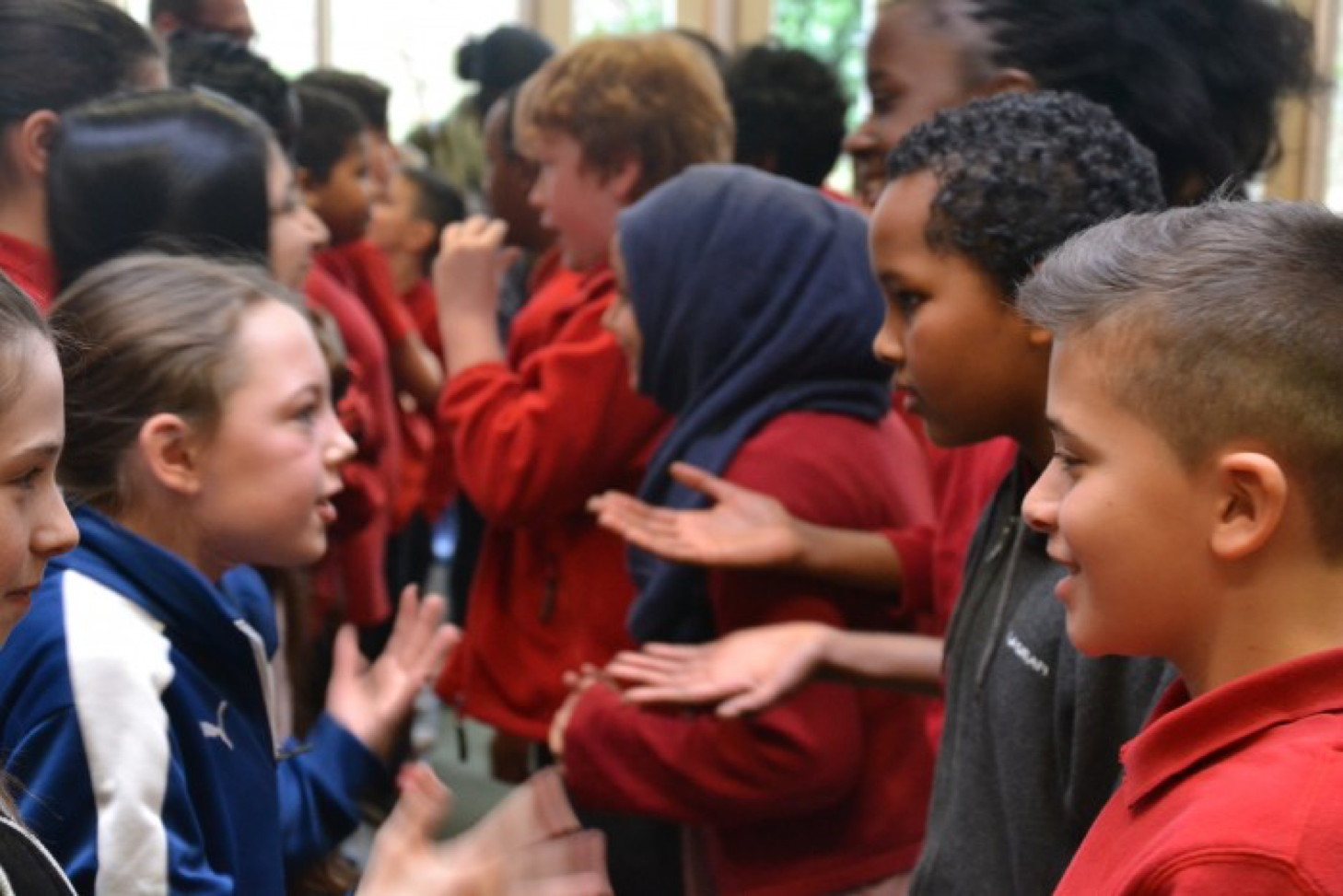


What do we mean by oracy?
Oracy in the classroom is the ability of children to talk about what they are learning. This will range from recalling of knowledge, to applying it in new ways, to expressing their opinion and engaging in debate.
Oracy is of growing importance in schools. As part of the 2025 UK Curriculum Review, oracy was flagged as a major area to develop, with a new oracy framework designed to help young people become more confident and articulate communicators.
The importance of tried-and-tested strategies that make an immediate difference in the classroom has never been greater.
The most recent Ofsted inspection toolkit asks inspectors to consider the extent to which:
'All pupils are explicitly taught how to communicate effectively through spoken language (oracy), articulate ideas, develop understanding and engage with others through speaking, listening and communication'
The Education Endowment Foundation tell us that oracy interventions are “Very high impact for very low cost based on extensive evidence.”
Successful oracy is absolutely foundational for everything else, and is children's first engagement with language. It's great to see it back front and centre where it belongs!
Keen to learn more about what oracy really means? Read our full guide.
Why Oracy Matters in Primary and Secondary Schools
Academic outcomes
If you can’t say it, it’s hard to write it. If you haven’t said it, it’s harder to remember it. A greater emphasis on oracy moves learning off the page and brings it closer to children who are less confident academically. For children who struggle to express themselves and marshal their ideas in writing, it’s essential that they get opportunities to do so in spoken language. Otherwise, they face three challenges at once - organsing their thoughts, shifting into a formal, academic register and putting pen to paper, all at the same time. By bringing two of those challenges into spoken language, you avoid children hitting what feels to some like an insurmountable cliff. The Education Endowment Foundation ranks oracy initiatives as among the highest impact, lowest cost routes to school improvement.
Confidence and wellbeing
Oracy helps children start conversations, make friends, resolve disputes and advocate for themselves. Especially since the pandemic, but with earlier roots before then in escalating screen use by both children and caregivers, teachers report a marked drop in speech skills. Oracy skills also have an impact in the world of work, and particularly with the rise of AI, interpersonal skills are increasing in importance in the workplace.
Vocabulary gap
Children enter school with huge gaps in vocabulary and fluency which can correlate with other forms of disadvantage. It used to be thought that this was driven by children’s early exposure to speech, but subsequent research shows that it is the quantity of serve-and-return interactions in which child and adult respond to one another that correlates with vocabulary, fluency and other markers of language acquisition and academic success. Language acquisition later in childhood isn’t quite the same, but high quality paired interactions with peers are still crucial in consiolidating and extending speech confidence - there simply isn’t enough time for whole class talk to help close the gap.
The relationship between children’s receptive vocabulary (what they can understand) and the expressive vocabulary that they can actively use goes both ways. Children need to be exposed to words repeatedly in order for them to enter their receptive vocabulary, and actively using those words in speech helps secure them for long-term use. Use it or lose it! We make it easy for teachers to build oracy into the bones of every lesson using vocabulary slides with short cues for understanding, and peer coaching questions, custom-generated by AI, (nothing fancy - just some tried and tested prompts).
Classroom culture
Teachers will readily accept that oracy skills are important, and everyone would be glad to take on a class that already had excellent oracy skills. But under the pressure of getting through the curriculum, it can be hard to find the time in the present for developing this crucial skills. Our approach is to equip teachers with efficient, effective routines that make oracy activities an appealing, quick part of planning and ensuring they “earn their keep” in covering curriculum and boosting engagement.
Equity and inclusion
“Hands up” is terrible for increasing existing inequalities - the most confident children hoover up opportunities for more practice, while the least confident can hide and hope they’re not asked to answer. But some of the strategies suggested to replace them, while including more children in the talk at the same time make the classroom a more anxiety-generating place for less confident speakers - “cold calling”, “pounce and bounce” - the clue is in the names! The strategies we share are truly inclusive, enabling all learners to find a speech-confident version of themselves within the classroom where they speak without being under duress.

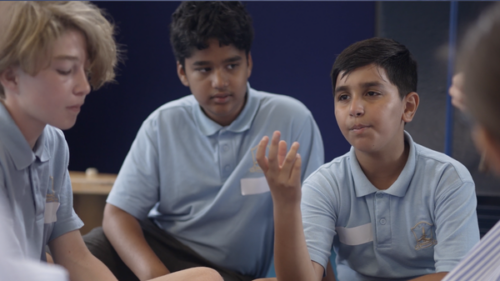

Our Approach to Oracy
Hundreds of schools trust us to help improve listening, develop independent thinking and help every child find their voice. All by showing teachers easier, more effective ways to work with their existing curriculum, not piling more on their plate. Here are two of our favourite oracy strategies to help unlock everyone's voice:
We place particular focus on three areas:
Agency:
- Embed questions that encourage discerning judgement that get students weighing up
different arguments and refusing to be a sheep. - ‘Serve and return’ interactions to help students make the most of partnered talk.
- Ways to express their judgements beyond the classroom and show agency in the world.
Understanding:
- Learn new ways to embed philosophical questions into your curriculum that stoke students’ curiosity and have them still arguing after the home time bell.
- Help them develop a deeper intuitive understanding of their topics through co-coaching questions that facilitate meaning making.
- Facilitate student metacognition through promoting a common vocabulary of thinking moves – and in the process, shrinking yourself
(but without losing your power!)
Wellbeing
- Create a deeper sense of belonging in the classroom through communities of enquiry.
- Cultivate resilience through games and activities that make philosophical argy-bargy irresistible.
- Learn how to craft new questions that deepen cognitive engagement.
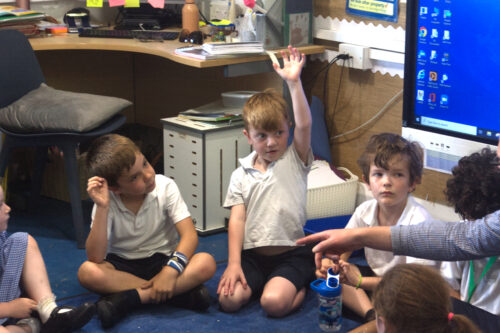
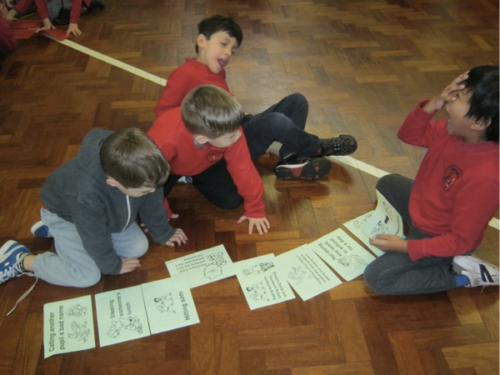
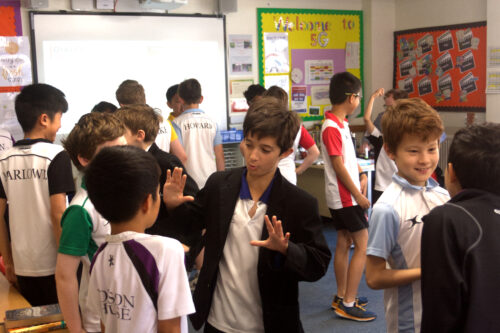
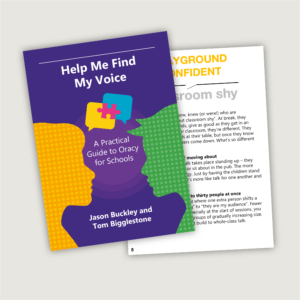
Our latest book: Help Me Find My Voice
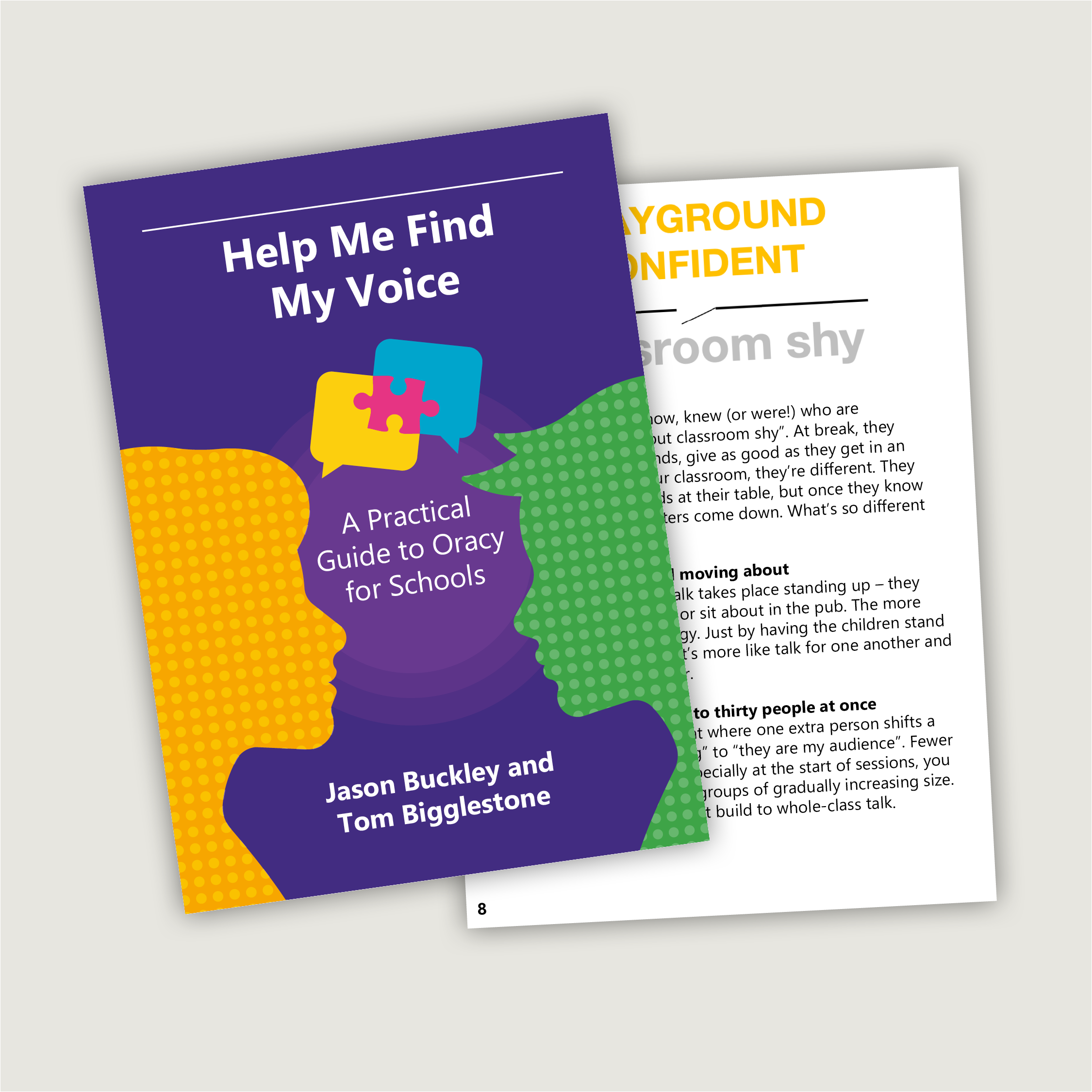
This practical A6 guide to oracy explores why kids don’t talk in class – from kids who are “playground confident, classroom shy” to those who need to be someone else before they can be themselves. It’s fifteen years of experience of getting kids talking, boiled down to twelve principles you can use in every setting.
We hope this book arms you with the strategies you need to make one of the biggest differences you can – helping a child find their voice.
Oracy in the Classroom: Practical Applications
There are many ways to apply oracy strategies into the classroom and beyond.
The lowest hanging fruit is to focus on two or three simple routines that harness the energy of disagreement to get every voice active.
Free ways to get our ideas into your school include subscribing to the bulletin, which will give you a kick-start sequence of twelve emails, as well as ongoing access to the latest things we’ve been doing in classrooms upa nd down the country.
If you have a small budget nothing beats our Sticky Questions programme for value for money. A year-round, weekly oracy activity from Reception up to Year 7 that gets children talking about intersting questions at home and in school.
How we can help embed oracy in your classroom
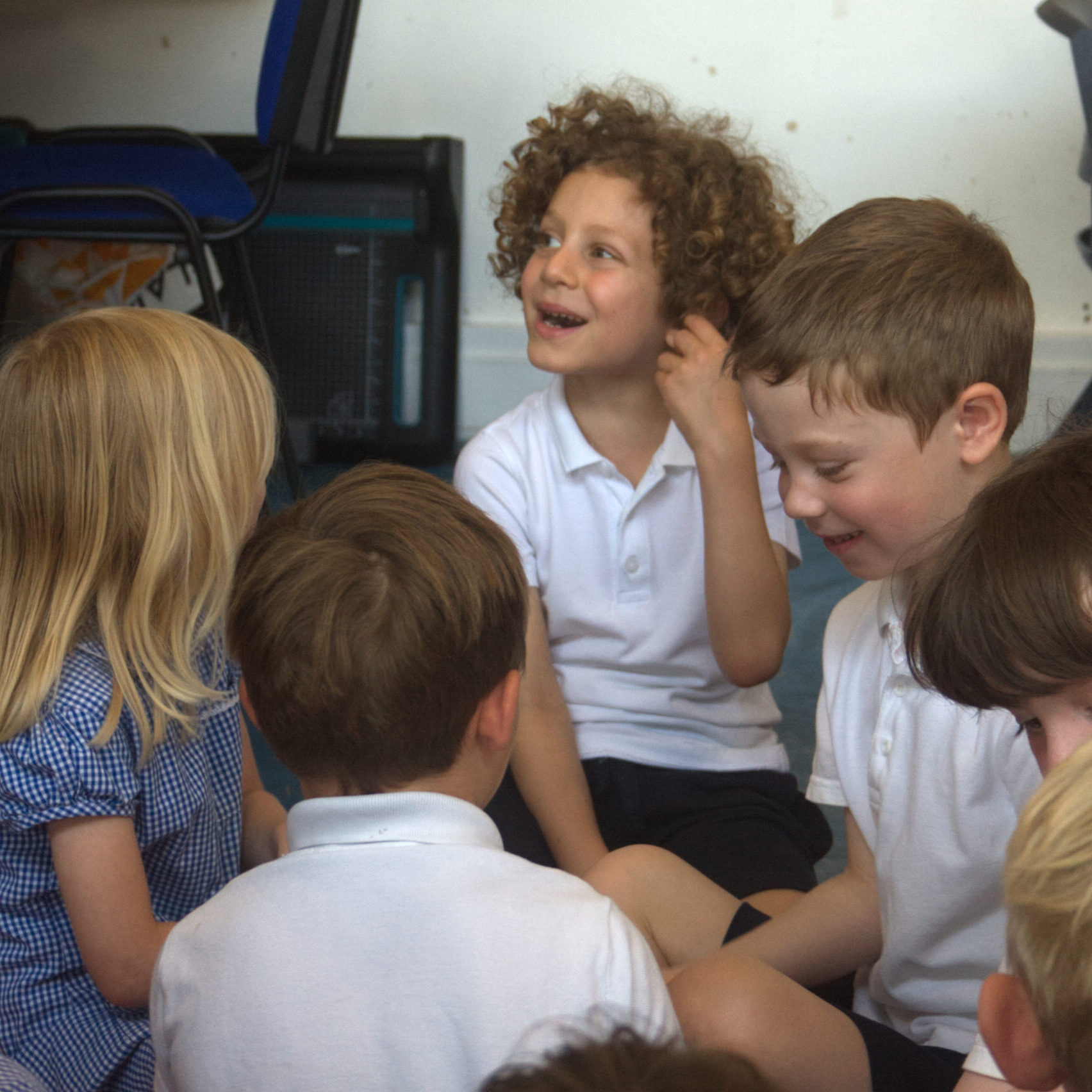
Training and Workshops
We work week-in, week-out with pupils and staff. Find out more about how we can collaborate with your school.
Visit our shop
As well as our free resources, we also write and sell books, and oracy packs to foster your long-term oracy success.

Get more resources
Read our posts full of teacher tips and topical ideas
Interested in training?
Contact us today to arrange a chat - choose from any of the options below.
Feedback from recent training. Can you spot the buzzword?
"I cannot describe the buzz and vibe from the staff, all down to you."
"You really did create a huge buzz in school, which is a difficult shout on the first day back! You covered everything we wanted out of the training and gave us mountains of material to use in class. I loved the fact you gave each phase some planning time to discuss ideas and plan sessions and then trial them out of colleagues. You have definitely given us some inspiration and I am very excited to see what happens next."
"There was a buzz during the staff meeting, which for any member of staff attending a staff meeting knows this is a rare thing! All the staff said how enthused and excited they felt to get back into their classrooms and try out the methods they had been shown."
"The questions raised interested everyone and there was a real buzz in the room. Our training was full of practical activities and games, with the just the right amount of discussion about teaching techniques interspersed. What an inspiring day!"
"It is us who would like to thank you. It was such an inspirational INSET and the staff were truly excited. The enthusiasm and buzz is palpable!"