
Since 2008, we've with hundreds of schools to provide practical oracy INSET for teachers in both primary and secondary schools, with a focus on helping staff embed opportunities for talk across the curriculum:
- Ready-to-use activities teachers can embed into any topic
- Simple, memorable principles that connect with your schools' values
- Tailored resources designed for each age group - no more EYFS staff feeling ignored.
We pride ourselves on delivering CPD that's practical, meaningful and lasting. We are thrilled at the feedback we get from schools about the impact it's had.
Every INSET is tailored for your school and there's something for every budget.
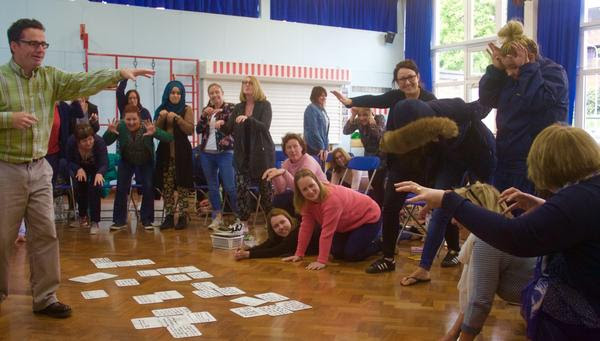
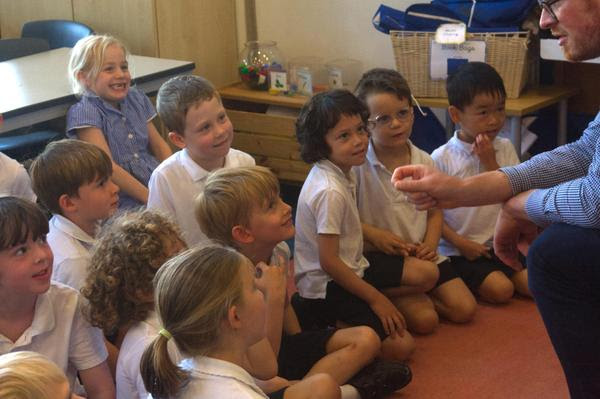
What's included in our oracy INSET?
There are a few ways to structure your oracy training (INSET / Pupil workshops / Curriculum Clinics, or a mix of all three) but no matter what you choose, three fundamental features remain:
Practical, classroom-ready activities
During any training, we share ready-to-use activities your staff can can adapt for any context or topic. We tailor these based for who is in the room, who if you're a primary school, expect specific resources designed for the EYFS just as much as those for KS2. It's really important that teachers buy into the approach!
Strategies grounded in solid evidence
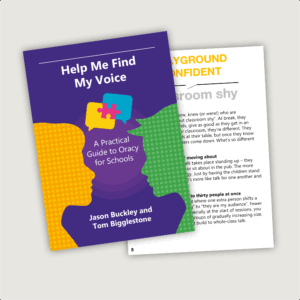
All of the activities are based our memorable 12 Principles of Oracy toolkit which make up our book Help Me Find My Voice. We don't just share "surface procedures" but go into the key underlying principles which make them work. This helps teachers' practice stay true to what each activity is achieving, rather than risk the ideas mutating into sequences that just keep learners busy.

Ready-to-use resources
Lots of ideas from INSET sound great on the day but get easily forgotten as handouts go to the INSET graveyard.
We make sure your day has a legacy:
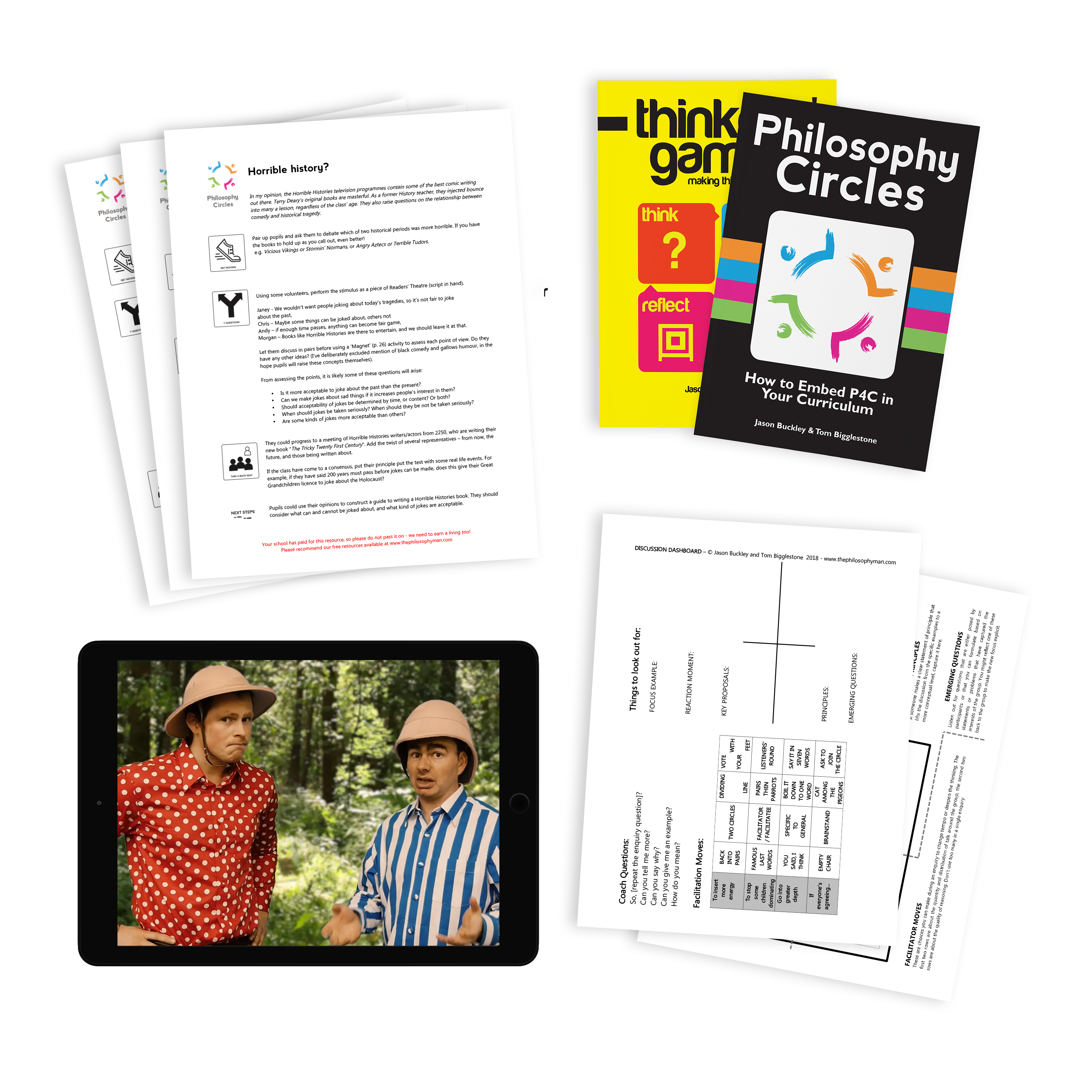
- Two pocketsized minibook for every teacher ("I still carry mine in my handbag!" said one recently).
- Pre-made Oracy resources that get talk going in every area of the curriculum
- Spot and Stripe videos to start conversations between pupils
- Short, one-minute "How-To" videos for teachers to keep referring back to
What can our oracy training look like?
All oracy training is created with the individual school in mind, and so no two bookings are the same. Some schools go for one day of INSET, some for two, some for more! Here's a quick run-down of the different things you can include in your package:
INSET days
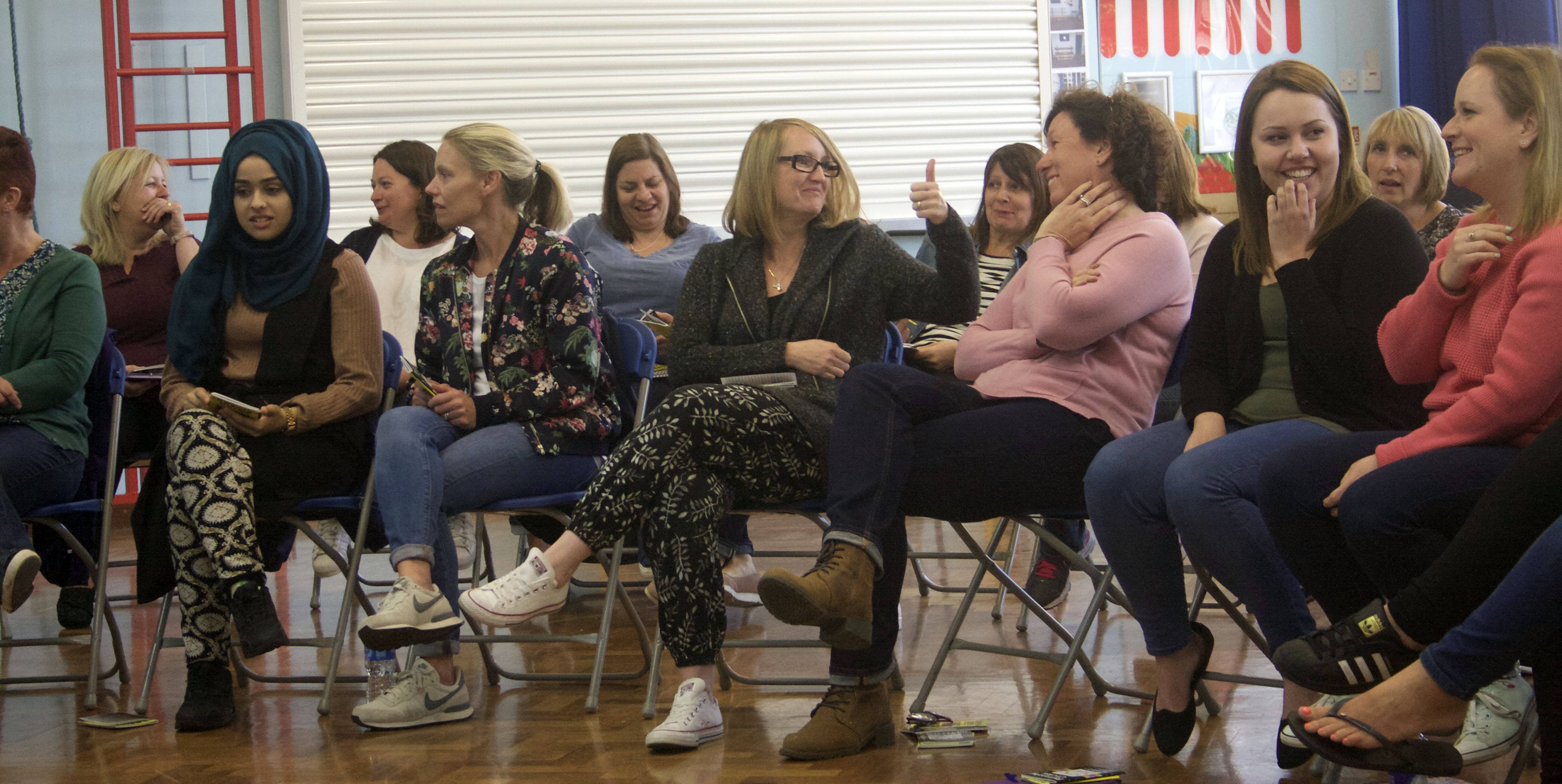
The simplest starting point for oracy training is a day, or half-day, of INSET. This will give your teachers:
- a practical understanding of the key principles time
- bags of experience as a participant in example activites, to see how they work first hand
- time to plan for embedding them into their upcoming topics, and the chance to road-test their new ideas in small groups
INSET days get booked up well in advance, so please contact us soon if you're thinking of one for during this or the next academic year. get booked up well in advance, so please contact us soon if you're thinking of one for during this or the next academic year.
We generally reserve the peak INSET days for those looking for full-days, because they are the most in demand, but if you are thinking of a half day, please still get in touch. We can review the calendar and see if there is another school that we can visit on the other half of that day.

Pupil workshops + twilight INSET
Another option open your school is a day of pupil workshops with twilight INSET in your usual staff meeting time. This is particularly useful if you're existing INSET schedule is tightm, as these can be done at any time during a term.
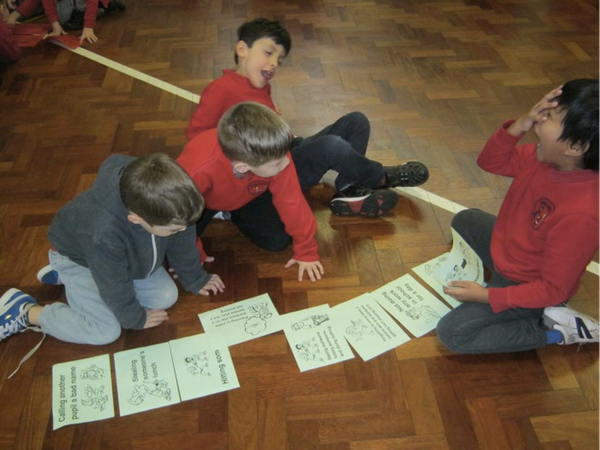
The benefit of this approach is that teachers see oracy strategies with their own pupils, in their own classroom and on their own topics. It's first-hand CPD and the ideas and activities are supported by a twilight session after school where we unpick what we did during the day.
Online INSET
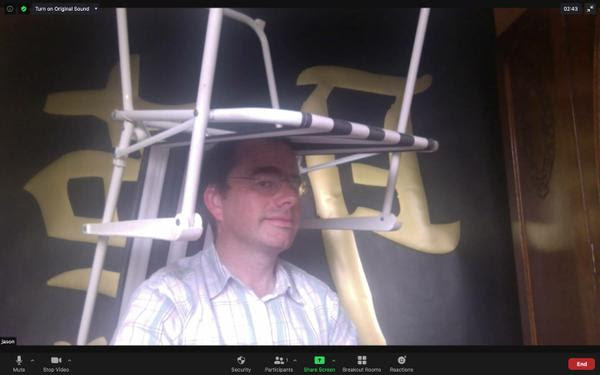
For schools who can't get us in, we also offer "Oracy for All" - a 90-minute online training session that fits neatly into your twilight staff meeting time. It works remarkably well (probably because we've been facilitating online for years) and gives your staff the chance to experience the best bits of our oracy INSET. The best way to join is as a group of ten or more colleagues on a single device, so that you can experience some of the activities yourselves.
Curriculum Clinics
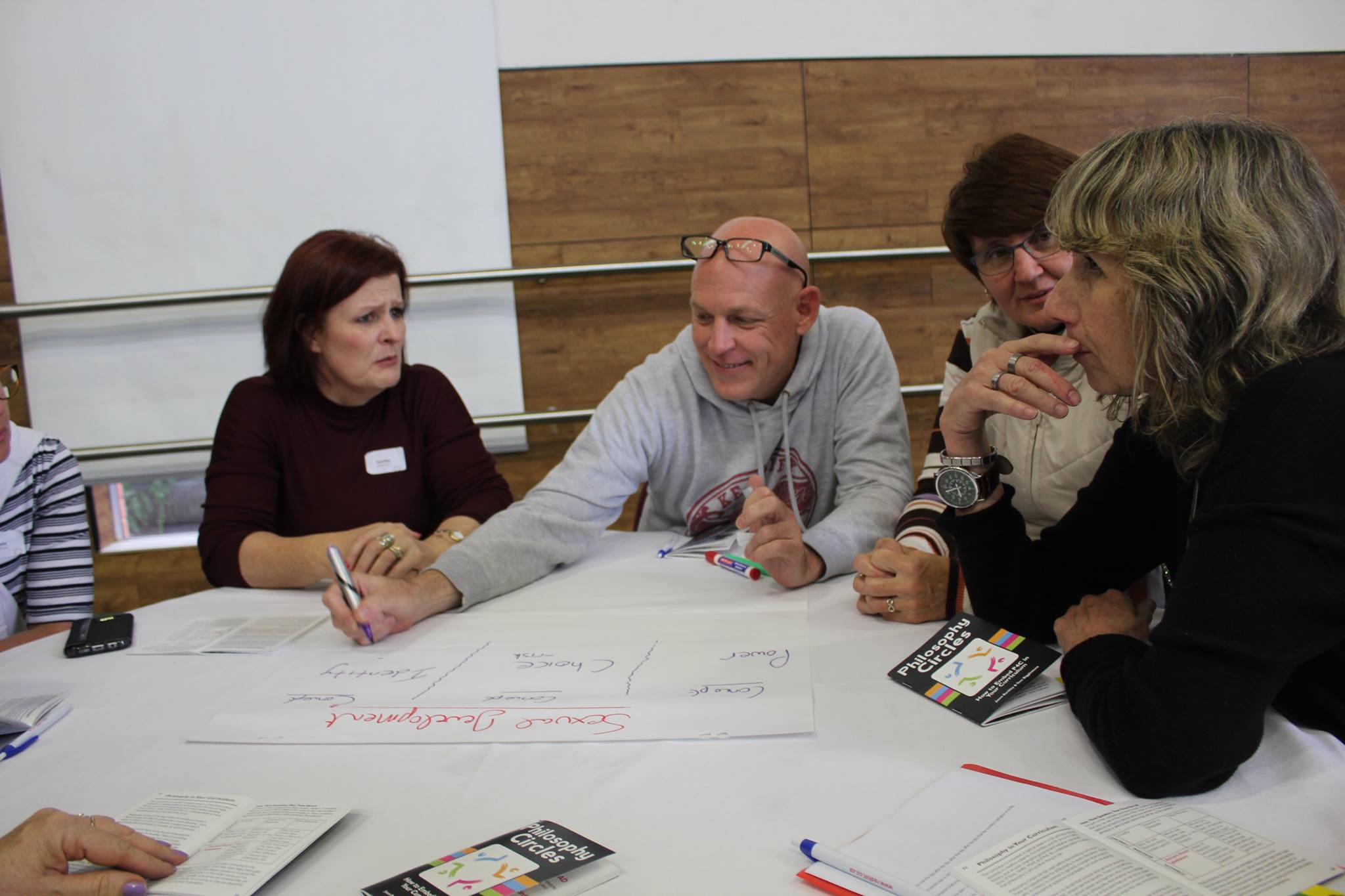
Curriculum Clinics give teachers or year teams personal tuition and coaching in embedding oracy activities into their topics. We sit down with them to look at their existing topic plans and work together to pinpoint opportunities for new questions and approaches can give more room for talk. We don't ask them to squeeze anything new in, but offer a different way of teaching what they're already teaching. They leave with a colourful mind-map of ideas related to their upcoming topic and buzzing to give some a go!
These sessions can build upon training the teacher may have already had to ensure oracy doesn’t get squeezed out by other commitments, and ensure that oracy remains a central component of their short, medium and long-term plans.
Fancy a chat about it?
No obligation - just a chat about what might be possible!
Our Practical Oracy Training Approach
Hundreds of schools trust us to help improve listening, develop independent thinking and help every child find their voice.
All by showing teachers easier, more effective ways to work with their existing curriculum, not piling more on their plate. Each of these principles are detailed in our book - Help Me Find My Voice - and form the basis of our INSET.
1. Playground Confident, Classroom Shy
Think of children you know, knew (or were!) who are “playground confident but classroom shy”. At break, they tell jokes, boss their friends, give as good as they get in an argument. But inside your classroom, they’re different. They might talk to a few friends at their table, but once they know you’re listening, the shutters come down. What’s so different out on the playground? In the book, and in our training, we explore the ways you can bring that playground energy in without losing any control.
2. Small Talk Before Big Talk
When did you last have a meeting where the very first thing you spoke about was the subject of the meeting? Unless you are getting fired or firing someone, it almost never happens. A meeting without preliminary small talk lacks the human touch. Yet when we get children to work in groups, we don’t usually leave any space for that small talk to take place. We assume that they are primed and ready to talk about whatever we want them to talk about. In our book and through our training, we outline the most practical ways to get them talking about something, before they talk about something of consequence.
3. Sides Then Selves
We take pride in getting children to think for themselves, celebrating their diverse opinions rather than imposing a point of view on them. The first question we ask is often some variation of, “What do you think?” But perhaps that question should come later For a start, we may be asking about something entirely new to students. So an honest response to, “What do you think?” could be, “Not much. In fact I’ve never thought about this at all.” So let's get them thinking about what someone might say, before asking them to give what they think.
4. Stretch
Think of a time when you’ve held back from entering a conversation you wanted to join. Maybe you felt intimidated by the complexity of a topic, or your limited knowledge of it compared to others, and didn’t want to be shown up. That’s what we call, “stretch” – when a child is held back from speaking because their answer to, “How hard is it going to be to get this right?” is “Too hard for me!” We detail ways to avoid the cognitive side of speaking fear, whilst maintaining the challenge.
5. Exposure
Think of a time when you were anxious about speaking because there were so many people, or the people were so important, or the event was so special. That’s what we call, “exposure” – when a child holds back from speaking because their answer to, “How bad will it be if I get this wrong?” is “Too bad for me!” Exposure is the social side of speaking fear. So how can we counteract it?
6. Shrink
Have you ever seen young children “playing schools”? What’s the time of day they most often act out? Almost everyone says, “the register”. My nieces used to get home, line up their dolls and register them within an inch of their lives. The dolls never learned a thing, but they never bunked off. It’s the time of day when the status gap between teacher and child is at its greatest. But this teacher power can work against us, and crucially, them, if we want them to talk. So how can we lower our status without losing our power?
7. Serve and Return
The most recent work seems to support the view that yes, there’s not such a huge gap in the words children have heard if you include overheard conversations, but that what really counts is the quantity and quality of conversational turns a child has - and while there is a correlation with social class there are plenty of exceptions in both directions. The book, and the training, shows you practical ways to create easy back and forths between pairs.
8. Co-Coaching Questions
How can you push for depth in 15 conversations at once? The answer lies in co-coaching questions. These are questions that students can use to push one another’s thinking deeper.
9. Talk Three Times
This is the simplest of all the principles in the book. Instead of getting them to talk about three different questions, get them to talk about the same question three times.
This principle is especially important if you have a class with EAL learners. If possible, their first talk can be with someone who shares their first language.
10. Speaking Without Thinking
We’ve reached some tricky cases on the edges of who you can help without specialist intervention. Those children who at some point in their careers, have discovered a pair of magic words that stop teachers pestering them. “I dunno”. There is something quite unchallengeable about “I dunno”. It takes its strength from the bald truth that each of us has a mind of their own. You might know (and care about it) but I don’t. And you can’t make me know something. But the trump card up our sleeve is getting them to speak without having to think. And we'll show you how.
11. Unwrongification
We looked at the fear of getting things wrong in Stretch and how hedging can help to mitigate it. But there are two other ways to make children feel either that they can’t get it wrong, or that it doesn’t matter if they do.
12. PRACTICE over performance
This is the final principle, because it sums up the shift in mindset that is needed for optimal oracy.
Outside the UK?
We work with schools across the world - visit our dedicated page for international schools.
Frequently asked Questions (FAQ)
Is this INSET suitable for the start of our oracy journey?
Yes! Many of the schools we work with are new to formally embedding oracy into their curriculum. For these schools, we put a focus on ease of application, so that teachers don't see it as something extra to squeeze in, but a set of fresh new strategies to liven and enrich their existing curriculum. We also don't bombard everyone with stacks of rigid lesson plans and artificial sentence stems to add to the papers stuffed in a file somewhere. We provide memorable principles that teachers can return to day after day.
Will this training teach us new things if we're already with Voice21?
Yes, whilst we enjoy a great relationship with Voice21 (we've spoken at their conferences, trained some of their staff and created resources for them) our practise differs. We focus on creating the best conditions for classroom talk through deliberate questioning, practical activities, and making thinking physical and energetic. All of our ideas and principles come from our classroom practice over the last 15 years (even before oracy was "cool"!) so we know it's original and different from anything else out there.
Will your INSET help us embed oracy in all subjects?
Yes, our focus is making oracy easy to apply no matter the topic. All of our activities can be embedded in any subject or context, and adapted for any age group. We're both former teachers of many subjects at both primary and secondary level, and our first passion was helping schools embed more philosophical discussions across their curriculum. If we're running a workshop day, we'll ask you to tell us the topics in advance so we can deliver something relevant for the children right now and model the process for teachers. If it's an INSET day, we'll ask for topics so we can share how each activity applies to what everyone's currently/about to teach.
How long, or short, is your oracy INSET?
This is up to you! We offer training options to suit all schedules and budgets. The most common INSET request is a day or half-day, and workshop days are usually the whole day plus a twilight INSET if we can!
Do we need to book more than one day?
There's no obligatory commitment up front to do more than one day - you can dip your toe in with one, and see how you find it, and go from there. Whilst we're confident you'd love working with us and find what we offer really impactful, we don't tie you to anything longer than you're comfortable with!
How much will INSET cost?
Everything we do is bespoke for each school. For the the best start, most schools choose a day of training plus or least one workshop day where teachers observe us with their classes. All prices are +VAT and reasonable expenses.
Half days begin at £500+VAT, and full days begin at £750+VAT.
There's lots of ways to do something within your budget. MATs and clusters often join together for a day to reduce costs and promote collaboration between schools.
We don't farm work out to lots of freelancers. If you book us, you get us - either Jason or Tom. We're two former-teachers who have been working with schools for a combined total of over 20 years.
We've never had negative feedback from a school, but if for any reason you were unsatisfied with your training or workshops, we will offer you your money back - no quibbles.
Interested in training?
Contact us today to arrange a chat - choose from any of the options below.
Feedback from recent training. Can you spot the buzzword?
"I cannot describe the buzz and vibe from the staff, all down to you."
"You really did create a huge buzz in school, which is a difficult shout on the first day back! You covered everything we wanted out of the training and gave us mountains of material to use in class. I loved the fact you gave each phase some planning time to discuss ideas and plan sessions and then trial them out of colleagues. You have definitely given us some inspiration and I am very excited to see what happens next."
"There was a buzz during the staff meeting, which for any member of staff attending a staff meeting knows this is a rare thing! All the staff said how enthused and excited they felt to get back into their classrooms and try out the methods they had been shown."
"The questions raised interested everyone and there was a real buzz in the room. Our training was full of practical activities and games, with the just the right amount of discussion about teaching techniques interspersed. What an inspiring day!"
"It is us who would like to thank you. It was such an inspirational INSET and the staff were truly excited. The enthusiasm and buzz is palpable!"