
Why Oracy Matters in the Primary Classroom
We never accept that a child is “naturally illiterate”, however much they hate writing, because we know how much they would lose out. Yet we sometimes accept reluctance to speak as a fixed aspect of personality, even though a child who won’t speak in front of their peers at school is unlikely to speak in front of their future colleagues. They may not get the same rewards for their learning - and their learning itself can suffer too.
Talking and Thinking Go Together
Speech is not just the result of thinking: it’s where much of our thinking gets done. We discover what we think in talking with others, and others’ responses help us think better. Of course, some children are more introverted than others, but all children need to be able to access a speech-confi dent version of themselves. They also need to be able to challenge the views of others and demand evidence, not just for flourishing personaland work lives, but so that we don’t get dragged to destruction by demagogues who thrive on ignorance and gullibility.

I'm leading oracy in a primary school. Where do I start?
Great question! With so much buzz around oracy at the moment, it's easy to feel overwhelmed in recommendations and ideas, and at the same time nervous about "getting it right".
In our view, the short answer is there's no wholly right or wrong way to embed oracy. There are a few recommended do's and don'ts, but the best thing to do is to trust what feels right. If you were a time-poor teacher in your school, what would you like to be given by your oracy champion?
Our recommended do's and don'ts
- DO give colleagues activities that can be immediately applied in the classroom, rather than wordy and abstract studies into oracy. Oracy activities should be time-saving, as they're easier to plan and add in spontaneously. They should also be adaptable for across the curriculum. Be weary of anything that looks like it could only work in one or two subjects, as it'll have little relevance to most of your staff.
- DO pass on simple techniques colleagues can use in their next lesson, such as the five below.
- DO take time to explain underlying principles rather than just surface procedures. This means the core factors that unlock children's voices will remain no matter how a teacher changes or adapts it for their practice. One of our principles, Playground Confident Classroom Shy, is detailed below.
- DO consider some external INSET. There's really nothing like a dedicated day, or half-day, with a fresh voice sharing new ideas. Our INSET time gives teachers a chance to look under the bonnet of the how, as well as the what, of oracy activities, and crucially gives them time to plan their own.
- DO do your research about the different oracy organisations out there. Who have been going for years? Who are jumping on the oracy bandwaggon?
Don't...
- DON'T book INSET from anyone who isn't an expert who has specialised in oracy for years. Also beware of trainers who haven't seen a child in the wild for over a decade.
- DON'T dump loads of files in Staff Shared and expect colleagues to delve in. Share a links to our weekly oracy bulletin, or videos of techniques in action, and perhaps even some of our minibooks.
- DON'T get everyone teaching an "oracy lesson" each week. Encourage short, sharp curriculum-embedded activities over a slot that'll easily get bumped for more pressing priorities.
- DON'T tell everyone this is something new we need to squeeze in. Adding more oracy opportunities is just another way of teaching what they're already teaching.
- DON'T assume that traditional, Western-centric examples of speaking and listening are appropriate for everyone. In some cultures, for example, it's rude to make eye contact, and intensely staring at someone as they speak could be offputting for neurodiverse children and cause more harm than good.
Immediate Oracy Idea: Playground Confident, Classroom Shy?
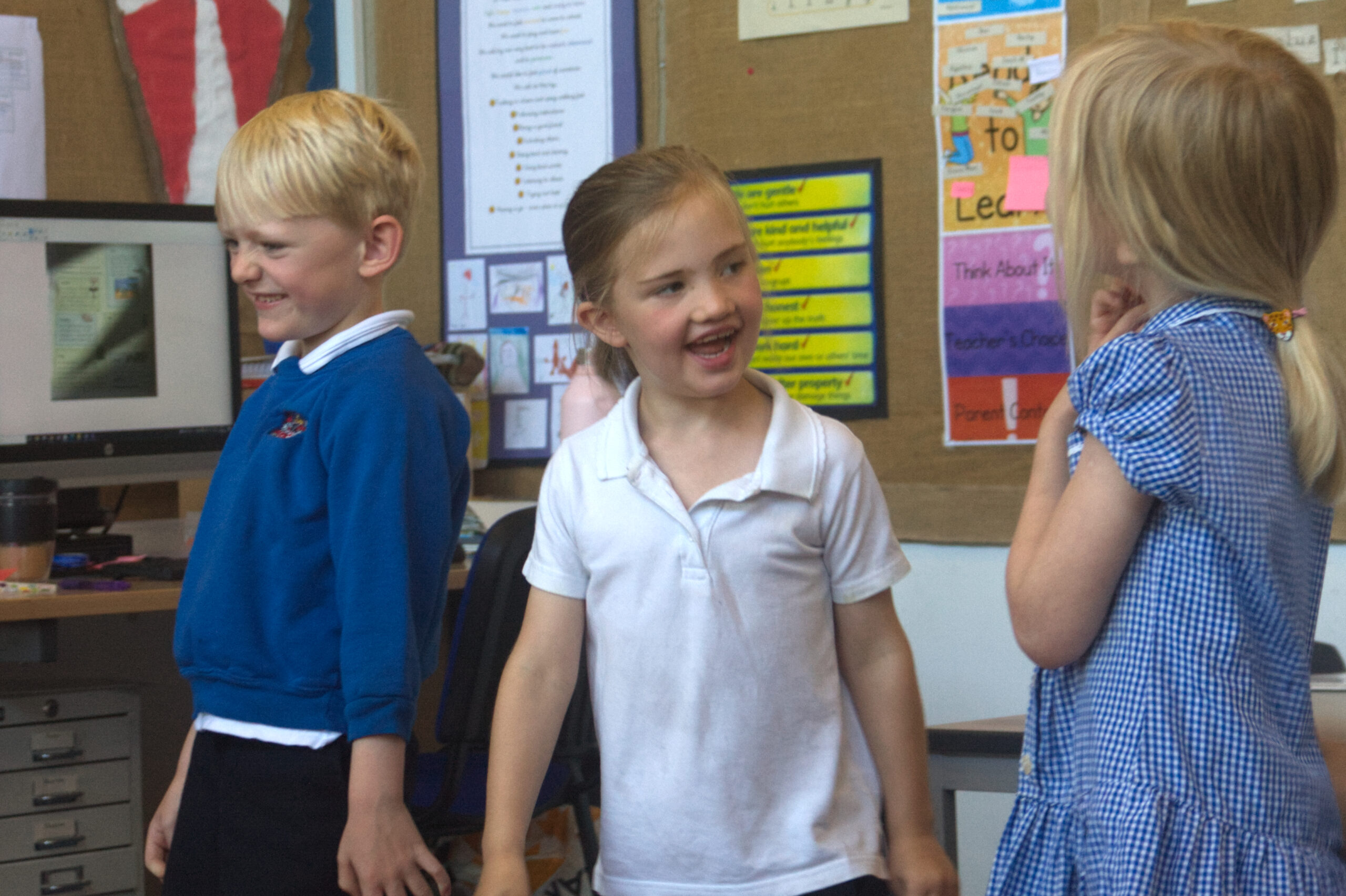
Think of children you know, knew (or were!) who are “playground confident but classroom shy”. At break, they tell jokes, boss their friends, give as good as they get in an argument. But inside your classroom, they’re different. They might talk to a few friends at their table, but once they know you’re listening, the shutters come down. What’s so different out on the playground?
They’re standing up and moving about
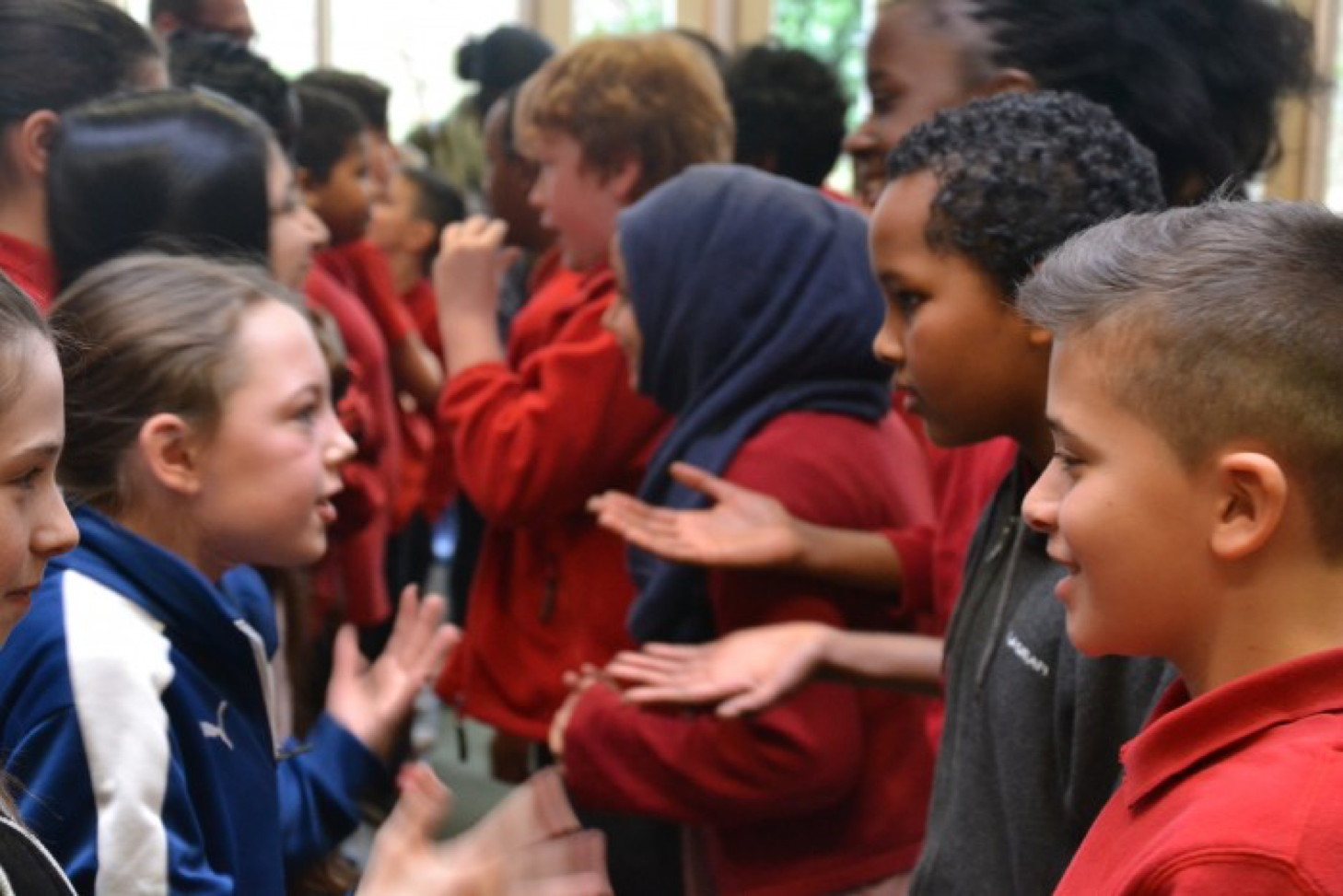
Most of children’s social talk takes place standing up – they don’t go to dinner parties or sit about in the pub. The more movement, the more energy. Just by having the children stand up and face one another, it’s more like talk for one another and less like talk for the teacher.
They don’t have to speak to thirty people at once
Everyone has a tipping point where one extra person shifts a group from "we are chatting" to "they are my audience". Fewer pupils will close down if, especially at the start of sessions, you use not just pairs but small groups of gradually increasing size. Don’t feel every session must build to whole-class talk.See Exposure.
They might be taking sides
Playful competition gives games purpose and energy. You are part of a team, with opponents to challenge. When children physically “take sides” in an argument, they feel supported by those who agree with them and energised by the responses of those who disagree. See Sides Then Selves, and Thinkers’ Games.
There’s lots of other noise
It’s easier to avoid being self-conscious if you are just one part
of a lot of noise and activity. On the playground, nobody is the centre of everyone’s attention - unless there’s a fight! Similarly, in the classroom, it’s easier for reluctant speakers to talk if lots of conversations are happening at once. Inhibitions get lost in the hubbub.
By starting with lots of voices in the room, you build social energy that may carry over into willingness to talk in front of the whole group. Conversely, if a reluctant speaker doesn’t break their silence in the privacy of a pair at the start, they won’t talk later when all eyes are on them.
Most importantly, out on the playground – you’re not there! Awareness of your presence will shut down some children from talking, however supportive you are.
If you can get children away from their desks, or at the very least out of their seats, and recreate the hubbub of voices you have on the playground, you’ll bring some of that playground confidence into your classroom. The next three principles bring to oracy even more of that outdoor feel of physicality and play.
The playground is a physical place, and we often think of thinking as a sedentary rather than a physical activity. Yet many figures of speech about thinking bring the abstract to life using physical terms: vote with your feet, opposing sides, dividing lines, shifting your position.
You can use them at the start of a discussion, or during a session to re-energise or to re-focus on a question that has arisen. You can read about all 38 activities in the Thinkers Games minibook series along with greater depth about how to construct them but here’s an outline and some examples.
Think, Commit, Justify, Relect
Most Thinkers’ Games share this four-stage structure.
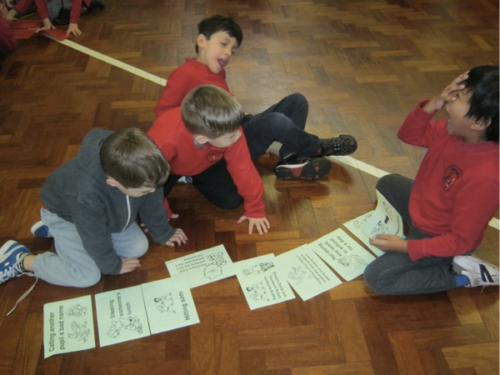
Think about a question where there are two (or more) plausible answers. Always have some time to talk in pairs.
Commit physically to your answer. This is the stage that makes each game distinct, and which is key to it being effective. Move yourself, part of yourself,or some stuff, so everyone can see what you think.
Justify your answer with some reasons and hear others’ justifications.
Reflect on what you hear, and show if you have changed your mind.
Example: Dividing Line
Think: Who have more freedom? Children or adults?
Commit: Stand over this side of the room for children, over that side for adults.
Justify: Choose one child to speak first, they choose someone from the other side, and it ping-pongs back and forth.
Reflect: When anyone changes their mind, they can swap sides, or edge towards the middle.

5 more quick, easy ways to help primary children talk more
Below, we've selected a few ideas from our repertoire of primary oracy principles (they're all in our book).
Use a chess clock
Get a colleague to use a chess clock app on a phone to see how much of talk time goes to you, and how much to paired or group talk. Try and shift the ratio over time.
Get yourself a set of Russian dolls
During whole class discussion, use a “conch” or talking object that is held by the speaker and then have several such objects for small group discussions. (Russian dolls are great for this). Each object is then charged with a bit of “teacher power” and can help maintain order in a discussion without the full inhibiting presence of an adult.
Arm yourself with Co-coaching questions
- Can you tell me more?
- Can you say why?
- Can you give me an example?
- How do you mean?
- Why is that important?
- How could you disagree with yourself?
- What would make you change your mind?
The great virtue of questions such as these is that there’s nothing to them! They’re empty questions with no particular content. That stops you as the facilitator from pushing your own thoughts into the discussion. In peer co-coaching, it means a child does not need to have subject expertise to ask them
Takeaway the "I dunno" card with one simple phrase
There is something quite unchallengeable about “I dunno”. It takes its strength from the bald truth that each of us has a mind of their own. You might know (and care about it) but I don’t. And you can’t make me know something.
Of course, sometimes children don’t know, and strategies such as “Yes, Maybe, Question” encourage children to share their thinking even when it hasn’t reached a definite outcome. But if a child resolutely maintains that they have nothing to say, even about their thinking in progress, you have one further trick up your sleeve to bring their voice into the discussion.
That’s to encourage speaking without thinking! One student does the thinking, and another does the speaking.
“Hands up if you’ve got a reason for your choice/an answer. If you haven’t got an answer, collect one from someone who has.”
Then hear from the contribution collectors rather than those who did the original thinking. Everyone is accountable for having something to share when called on, and “I dunno” has lost its magic. If you use this enough, they might decide it’s easier to just say what they think in the first place.
Seven-word blurbs
Pupils find it a really fun challenge to boil down their opinion or thinking to seven words. Give them time to rehearse this with a partner, followed by contributions to the group. There's something rather non-threatening about putting their ideas out in just seven words - perhaps it's the fact every set of seven sounds a bit humorous, or the fact they divert their gaze to their fingers to avoid awkward eye contact. It's a winner!
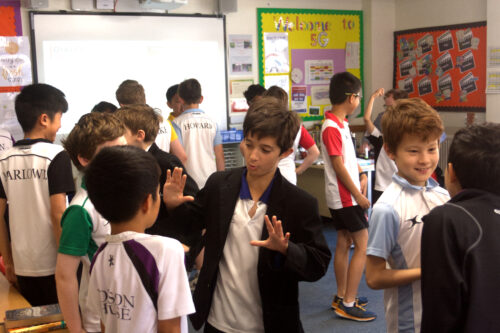
Embed Oracy Across the Primary Curriculum
There are many ways to embed oracy, more than we can detail here, so we'll plump for one that gets them thinking deeper whilst lessening your workload. We call it the Topic Exploder.
First, take your topic and look for the key concepts or big ideas within it. This means stepping away from the content. So for War, don't think "1939" or "Battleships", but big ideas of universal importance relevant to this topic. They're usually abstract nouns, emotions or roles people play. In this case, we might say "Conscription", "Animal welfare" and "Goodies/baddies".
Next, for each of the concepts, create a question that has two or more contestable answers. We call these See-Saw Questions. You don't want all See and no Saw, so it needs to be something that reasonable people can disagree on. Starters such as "Does...", "Is...", "Should..." and "Can..." are great for these.
Finally, think of an Thinkers' Game that could help the pupils get their teeth into this question. We've created an example of a Topic Exploder below:
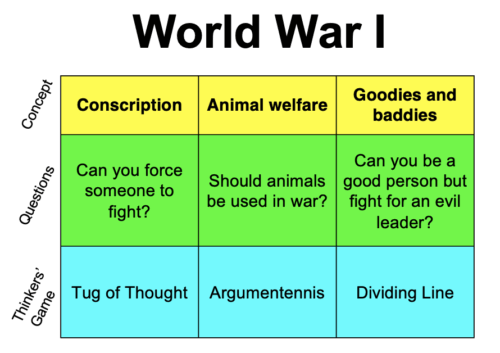
This is a shorter version of a fuller process which Jason goes into in the video below, for the topic of Toys.
Our latest book: Help Me Find My Voice
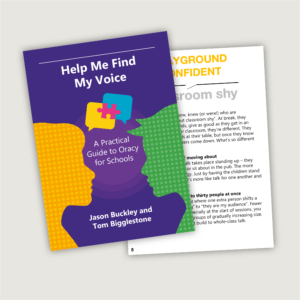
This practical A6 guide to oracy explores why kids don’t talk in class – from kids who are “playground confident, classroom shy” to those who need to be someone else before they can be themselves. It’s fifteen years of experience of getting kids talking, boiled down to twelve principles you can use in every setting.
We hope this book arms you with the strategies you need to make one of the biggest differences you can – helping a child find their voice.
Oracy activities and games
We've got a special page full of oracy activities for you to try.
Common Mistakes Primary Schools Make With Oracy
Confident speakers already have their oracy skills
“Her oracy’s fine. She could talk the birds from the trees.” When some children find it a challenge to contribute to whole class talk at all, it’s easy to forget that your most confident speakers deserve comparable challenges of their own –otherwise, what learning are they getting out of that part of their education? There are easy ways to make it more difficult, and give those students opportunities for growth.
Jumping straight to whole-class discussion
When did you last have a meeting where the very first thing you spoke about was the subject of the meeting? Unless you are getting fired or firing someone, it almost never happens. A meeting without preliminary small talk lacks the human touch.
Yet when we get children to work in groups, we don’t usually leave any space for that small talk to take place. We assume that they are primed and ready to talk about whatever we want them to talk about.
But often, the small talk either intrudes anyway, or doesn’t happen and therefore the “Big Talk” is from a cold start and feels stilted.
A good rule to follow when you want effective dialogue in the classroom is to get the children talking about a less important question before you get them talking about the main topic. Have them talk about nothing before talking about something!
It relaxes them, makes sure everyone is engaged, defines groups, makes sure they can hear each other, and breaks the ice for the serious talk that follows as you build Stretch gradually. Read more...
Over-reliance on performance or presentations
There lingers a belief that speaking in front of the whole class is the “real McCoy” of oracy.
The general tendency is to see paired talk as feeding into group talk which feeds into whole class talk. Yet whole class talk simply doesn’t provide enough of the Serve and Return opportunities less practised speakers need to thrive. Whole class talk increases exposure and isn’t the best for children who are Playground Confident and Classroom Shy and there’s certainly no opportunity for Co-Coaching Questions.
So when time for talk is limited, why do we squander so much of it on whole class talk?
It’s because another performance is underway - our own performance of “being the teacher”. Whole-class talk is the time when we can monitor, judge, hold the reins, conduct the orchestra. It’s when we most feel we are doing our job. So how can we balance paired and small group talk with whole class discussion? Read our article on "Practise over Performance" to find out.
How we can help embed oracy in your classroom
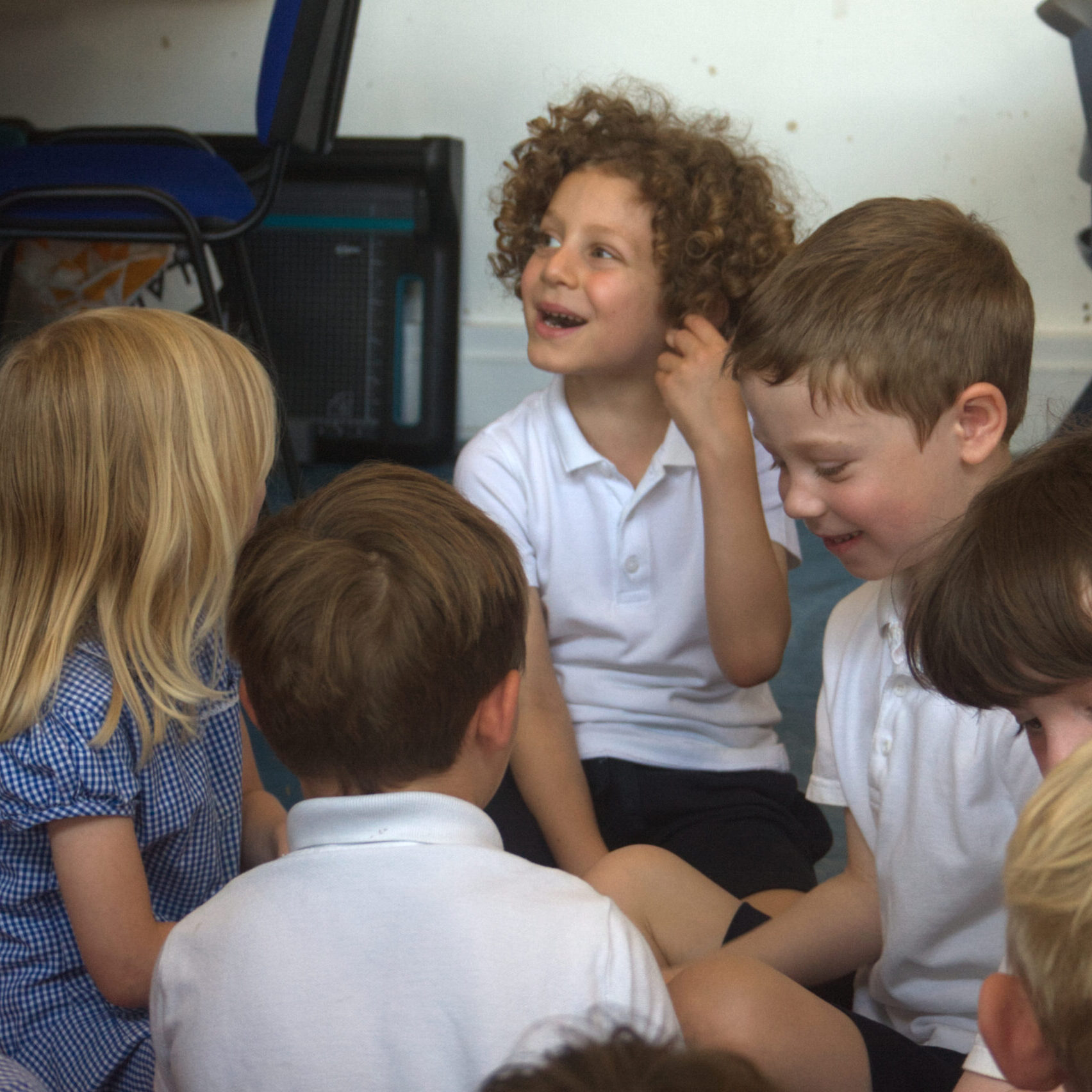
Training and Workshops
We work week-in, week-out with pupils and staff. Find out more about how we can collaborate with your school.
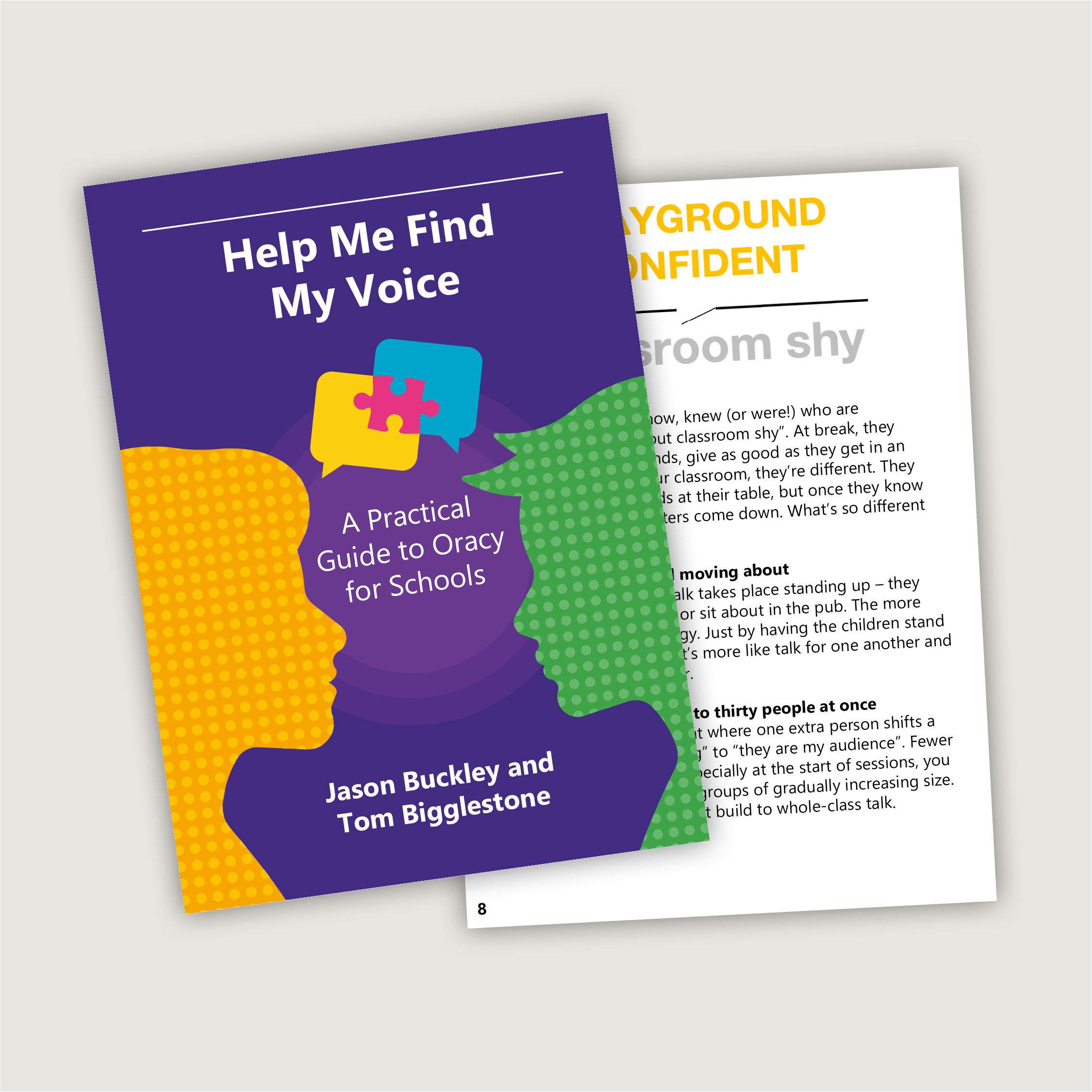
Visit our shop
As well as our free resources, we also write and sell books, and oracy packs to foster your long-term oracy success.
Get more resources
Read our posts full of teacher tips and topical ideas
Feedback from recent training. Can you spot the buzzword?
"I cannot describe the buzz and vibe from the staff, all down to you."
"You really did create a huge buzz in school, which is a difficult shout on the first day back! You covered everything we wanted out of the training and gave us mountains of material to use in class. I loved the fact you gave each phase some planning time to discuss ideas and plan sessions and then trial them out of colleagues. You have definitely given us some inspiration and I am very excited to see what happens next."
"There was a buzz during the staff meeting, which for any member of staff attending a staff meeting knows this is a rare thing! All the staff said how enthused and excited they felt to get back into their classrooms and try out the methods they had been shown."
"The questions raised interested everyone and there was a real buzz in the room. Our training was full of practical activities and games, with the just the right amount of discussion about teaching techniques interspersed. What an inspiring day!"
"It is us who would like to thank you. It was such an inspirational INSET and the staff were truly excited. The enthusiasm and buzz is palpable!"