
Embed oracy fast under our expert guidance
You've heard enough about the impact of the oracy to know it's time to really do something. But what?
We really do think one of the most valuable things we do is showing teachers oracy strategies in action, so they can see the principle of effective oracy at work with their own students.
Combine this with twilight INSET, and you've got a recipe for meaningful change. Oracy will make so much more sense when they see it happening “for real” in their classroom.
Our Philosopher in Residence programme is the best value, highest impact way to make a start with oracy. Scroll down to learn more.
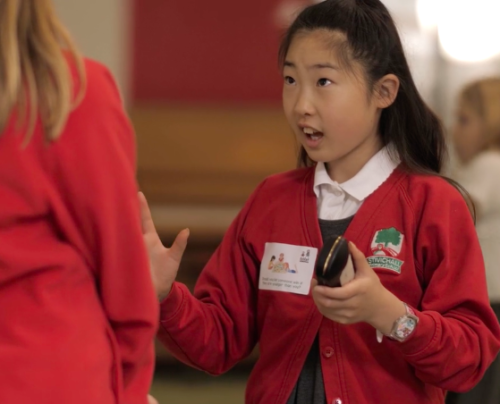
Why book a Philosopher in Residence?
When you book one of us as your "Philosopher in Residence", teachers see oracy in action before giving it a go themselves using our resources and with our support.
No two residencies are the same - everything is tailored for your school - but three things always remain:
1. Pupils make rapid progress in their thinking skills thanks to a sustained programme of oracy lessons.
2. Teachers observe the range of ways they can use our oracy strategies in their curriculum, and feel inspired to try it out themselves.
3. Teachers immediately embed more oracy into their practice by running their own sessions, under our guidance and using our resources. There's no case of "I'll get round to that one day..."
How does "A Philosopher in Residence" work?
Before the residency:
We have a Zoom or phone call with you to discuss your school’s context and the priorities you have for oracy. The minibooks included with the course – up to thirty copies of Philosophy Circles and Thinkers’ Games are sent to you in advance, along with a brief video introduction from us to your staff.
Your staff try out some taster activities with their pupils. These are sent over in advance, tailored to each year group. They are designed so that they can be run without specialist training in Philosophy Circles by any classroom teacher.
Week 1:
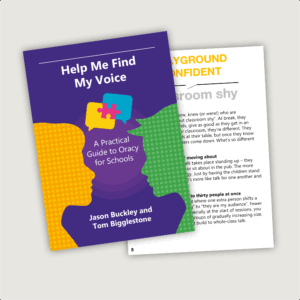
I deliver a day full of pupil workshops, followed by a twilight INSET introducing the key principles of our book "Help Me Find My Voice", and demonstrating some of the activities the teachers will use in their sessions. A whole school assembly can be included to build some anticipation among the pupils.
Week 2: .
I return with a carefully selected session plan for each class, with teachers observing. They reflect on the session - noting what went well, and any particular questions most relevant for their pupils - for example "How do I stop the more confident children dominating the discussion?" They email these to us, and so when we return...
Week 3:
I run another set of workshops demonstrating answers to their questions. This is followed by another twilight focused on questioning skills that are useful across teaching, not just within philosophy sessions.
Week 4:
I run another set of sessons, this time focussed on a particular topic area requested by each teacher - to show how the techniques can be embedded easily into the curriculum.
Week 5:
Another full day of workshops and twilight – this time, the option is open for staff to be observed or to team-teach and receive constructive feedback.
Week 6:
After meeting with the Headteacher/SLT, we decide the best use of this final week. Popular choices are coaching, curriculum clinics and training of pupil facilitators.
Why book a Philosopher in Residence?
Booking a Philosopher in Residence is an commitment. There's lots of ideas competing for your school budget, so how do you know it'll be worth the investment? Here's just 3 reasons...
Help children find their voice
More and more children arrive in reception scarcely talking at all. Parents distracted by social media speak less to their children, and the impact is growing. In one school with many younger parents, children joining reception completely nonverbal rose from five, to half to the class.
If they don't learn to talk confidently to groups in their primary years, it's unlikely they ever will. That impacts their learning, and their economic and social wellbeing. You'll learn how to overcome the different obstacles children have to speaking, and get (almost) every child talking:
- Playground Confident, Classroom Shy - how to empower children who clam up in the classroom
- Chance, Chain, Choose - how to reduce inequality in the classroom
- Separating Thinking and Speaking - how to beat the "I dunno" card
- Unwrongification - how to free children from the fear of getting it wrong
- Small Talk Big Talk - how to keep them talking while raising the stakes
- How to make thinking a game by making it physical
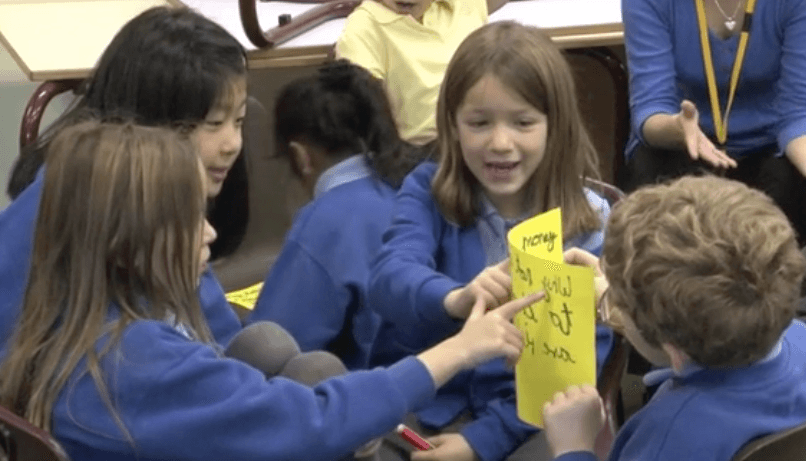
It's Practical for Teachers
With the ever-increasing pressure from above, teachers feel more and more accountable for planning every minute of children’s learning. It creates a dependency culture, with children always looking to the teacher. Learn how planning less and letting the questions do the work fosters greater independence and faster progress.
During a "Residency", teachers can see how easy it is to embed oracy, and immediately give it a go themselves. There's no wondering of "where am I going to fit this in?" or "I'll do this soon" and it never see the light of day.
- Sessions that support deeper reflection about seasonal events such as Christmas, harvest and Easter
- How to create deep, worthwhile discussions within a 30 minute timetable slot
- Dozens of ready-to-use activities your staff can can adapt for any context
- Simple, memorable principles that connect with your teachers' values
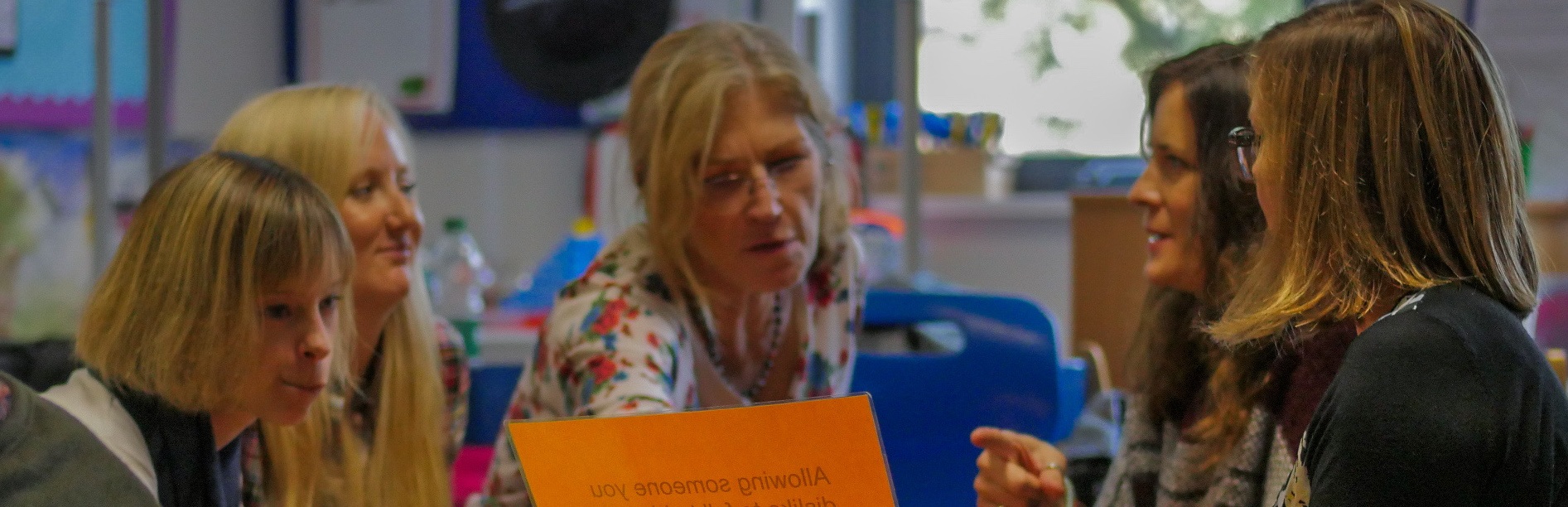
It's Spreadable to your Whole School
Even once the "Residency" is over, the resources keep coming...
Handouts from training courses often sit in the "INSET graveyard'. It's full of ideas that sounded great on the day but which never quite got passed on to colleagues. Teachers are very busy, and so new initiatives often get buried under the hectic pace of day to day teaching. To avoid that, each booking includes attractive minibooks that are written with busy teachers in mind, and following the "Residency" our huge range of resources means there's every support for you and colleagues continue using P4C regularly.
The books have memory aids in the form of stories, summaries and catchily-named activities so that it is easy for colleagues to make it part of their general teaching style.
Over 150 session plans for use within the primary curriculum
Any Philosopher in Residence booking includes our Premium Pack of Resources - 150+ 30 minute sessions on the most popular primary school topics. It makes it another, richer way to do what you do already, rather than something else to squeeze in.
Tailored Resources for EYFS/KS1
Much primary school training is focused on KS2, with Early Years teachers left to adapt as they can. Our sequence of a year’s worth of professionally filmed “Spot and Stripe” videos provide the perfect introduction to philosophy for younger children, introducing children to discussion and argument through colourful, fun characters and irresistible questions.
Who will be your Philosopher in Residence?
About Jason Buckley

The Founder and Director of The Philosophy Man. A life-long philosopher and former teacher, English, Jason is now an internationally renowned trainer, writer and speaker on P4C, classroom dialogue and stretching the more-able. He is author of two books, with more in the pipeline. He is also an outdoor educator, storyteller and improviser, and all these skills come together in his lively training, with minimum of Death by PowerPoint.
About Tom Bigglestone

Tom's courses are incredibly well-received thanks to his several years’ teaching experience. He has been Head of Department at both primary and secondary level, and in both the maintained and private sector. He has specialised for several years in P4C, and in 2014 was awarded The Walter Hines Page scholarship, for which he spent time in the United States researching assessment of philosophical skills. He brings his vast classroom experience and know-how into his energetic and interactive training.